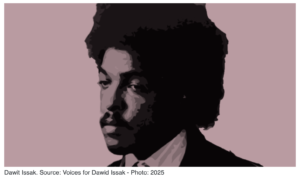

Sweden and the EU’s highly pragmatic approach towards Eritrea has failed to secure any clear concessions from one of the world’s most repressive regimes write SUSANNE BERGER and CAROLINE EDELSTAM
“Rumors of an impending release of 800 prisoners or more have been swirling in Asmara for weeks now. If true, hopefully also Dawit Isaak’s ordeal and that of his family can finally come to an end. Sweden’s Foreign Minister needs to make clear that she will accept nothing less.”
You can find a shorter version of this article in GLOBAL BAR MAGAZINE, in Swedish and English (to be posted soon).
January 12, 2026
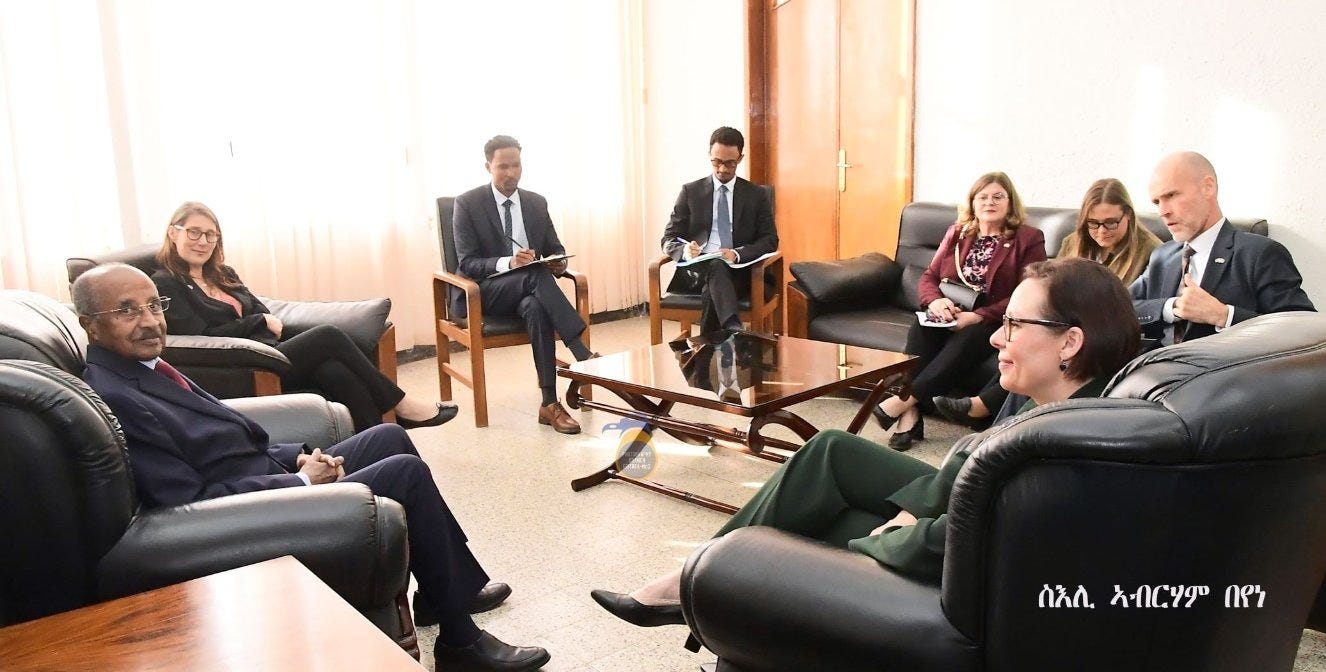
Shortly before Christmas came news about a surprise two-day visit to Eritrea by Swedish Minister for Foreign Affairs Maria Malmer Stenergard, the first by a top-level Swedish diplomat in 32 years. According to a statement by the Eritrean Ministry of Information the visit focused on bilateral relations as well as peace and security issues.
At home in Sweden, expectations centered on the fate of Swedish Eritrean journalist Dawit Isaak, who has been unlawfully imprisoned in Eritrea for 24 years. However, hopes for his immediate release were quickly dashed. Nevertheless, in a press conference after her return, Malmer Stenergard declared herself satisfied with her visit and what she said was the start of a “new approach”, one that would allow for continued talks on a range of issues, such as Dawit Isaak, regional tensions and broader global challenges. The Minister also publicly confirmed that she believes Dawit Isaak to be alive.
The new age of Swedish political realism
The most important aspect of the trip, however, went virtually unnoticed – the fact that just like Malmer Stenergard’s earlier visit to China back in October 2025, her decision to travel to Eritrea marked a new era in Swedish foreign policy: Sweden now freely embraces a highly pragmatic policy approach, part of a trend generally referred to as geoeconomics. It places a premium on the pursuit of national interests, economic, strategic, and political, while deemphasizing value-based policy making, including the advocacy for human rights.
The Swedish Foreign Minister’s visit took place against the backdrop of Eritrea showing signs of diplomatic opening in recent months, as well as the surprise release of 13 political prisoners, some of whom had been held for up to 18 years without charge or trial. This was followed by the release of approximately 100 other detainees, mostly protestants and members of evangelical churches that are banned in Eritrea
Observers cautiously welcomed the Swedish Foreign Minister’s gamble, with some praising her political courage and the fact that relations between the two countries are now “back on track.” Malmer Stenergard’s visit also served to emphasize that the responsibility to end Dawit Isaak’s suffering and that of thousands of other Eritreans rests entirely with Eritrea’s leadership.
Betting on regime change
Other analysts expressed themselves more cautiously, including Kjetil Tronvoll, a leading expert on Eritrea, who stressed that over the past three decades, the regime occasionally has chosen to engage in diplomatic outreach, “without this supposed opening resulting in any substantive institutional or policy changes.” Some human rights organizations, including the Edelstam Foundation, warned that “anything less than the release of Dawit Isaak risks legitimizing a dictatorship that has committed grave and long-standing human rights violations.”
This last point does not appear to trouble Swedish diplomats too much any longer. Nevertheless, important questions persist on what precise terms the normalization of relations between Sweden and Eritrea is based, other than pragmatism. It remains unclear if Malmer Stenergard received any prior assurances that future prisoner releases are on the agenda, and if Dawit Isaak will be among the freed individuals.
The Eritrean government faces growing pressure, both at home and abroad, with an increasingly vocal diaspora calling for regime change. Swedish officials apparently felt that the timing was right to seize the moment, as Eritrea’s aging leadership will be forced to make serious concessions sooner rather than later. If that is indeed the political calculus, Dawit Isaak certainly has paid a high price for Swedish policy makers and the rest of the international community essentially “waiting out” the Eritrean regime.
Securing Swedish interests in a political powder keg
The seeming lack of urgency of Stenergard’s “new approach” raised concerns in some quarters, including with Dawit Isaak’s family. His daughters expressed worry that Malmer Stenergard’s pivot back to engagement with the Eritrean leadership (an approach pursued for over a decade, with few if any positive results) will take time to bear fruit – the one thing their father does not have, after spending a quarter century in the regime’s notoriously brutal prison system, as they noted in a joint statement.
Malmer Stenergard’s trip appears to have focused mainly on solidifying Sweden’s and the EU’s strategic interests in the Horn of Africa. This is also underscored by the fact that already back in July 2025, Italian and Eritrean officials signed a broad cooperation agreement in Asmara, across “multiple sectors”. According to press reports, the two countries engaged in “discussions aimed at promoting regional peace, security and stability” – almost verbatim the same agenda now cited by Malmer Stenergard.
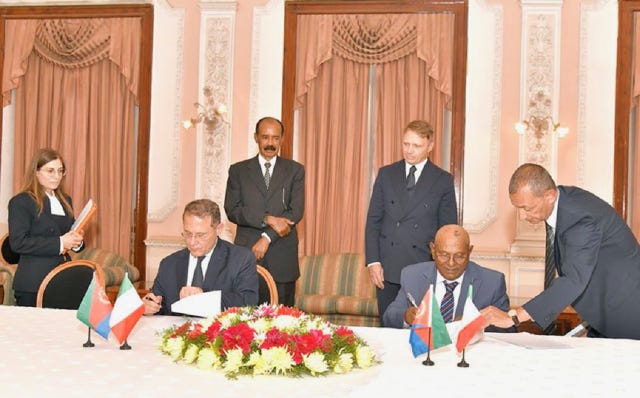
Source: Eritrean Press https://t.co/Tf9HnWXM24″ / X
Over the past months, the Horn of Africa has become a geopolitical focal point. Ethiopia is threatening military intervention over its demands for Red Sea access via the Eritrean port city of Assab. In a move sure to energize both supporters and detractors, Israel recently officially recognized Somaliland (a breakaway region of Somalia), further exacerbating regional tensions that spill into broader conflicts and alliances with powers like Iran, Saudi Arabia, Egypt and Sudan where one of the world’s most serious human rights crises is unfolding. In this smoldering powder keg Eritrea has a long history of functioning as a destabilizing factor, mainly for strategic rather than ideological reasons.
Sweden’s full embrace of geoeconomics
Eritrea’s recent diplomatic outreach to countries such as Egypt and Saudi Arabia has been driven in large part by domestic woes and mounting security concerns. Its three-decade pursuit of self-reliance (rejecting Western aid and debt-driven development), combined with iron-fisted autocratic rule, has driven the country to the abyss, economically and politically. A recent social media post by Eritrea’s Ministry of Information proudly touted major road construction and rural electrification projects – advances associated more with the early 20th rather than the 21st century.
Swedish media paid virtually no attention to one of Stenergard’s most revealing statements: that, unlike Italy, Sweden has not concluded any formal agreements with Eritrea. Presumably this would have been a step too far, given the fact that despite the positive public spin about the visit, Stenergard returned essentially empty-handed: According to her account, she secured no clear proof of life for Dawit Isaak and no contact with him. (It cannot be excluded that she obtained more direct information that would be too sensitive to reveal).
This was, in many ways, reminiscent of Stenergard’s earlier trip to China. During her December 19 press conference, Stenergard emphasized the symbolic importance of her trip to Beijing that took place on October 17, the ten-year anniversary of the transnational kidnapping and detention of Swedish publisher Gui Minhai. His family has not had a sign of life for him since 2018. So far, not even a €2 billion investment by Swedish truck manufacturer Scania could win even this most basic humane gesture from the Chinese government.
With regards to Eritrea, Stenergard stressed she is in regular contact with Italian diplomatic colleagues. Not only does Italy maintain close ties to Eritrea as a former colonial power, but the country is also the initiator of the EU’s so-called Rome Process. First outlined by Italian Prime Minister Georgia Meloni in 2023 and later adopted by the EU, the legislation sets out a highly pragmatic agenda, with focus on economic development and the curbing of irregular African migration. Sweden formally endorsed the plan in February 2025. In short, the Swedish government is now fully onboard with the EU’s new clear-eyed foreign policy approach and is not afraid to say so.
The broader aim is to offer a viable alternative to Chinese and other foreign interests on the continent. Critics have pointed out that the so-called Mattei plan which underpins the Rome process, makes no reference to human rights and elevates serious human rights violators to political partners. Similarly, the EU’s €150 billion Global Gateway Africa investment initiative makes only a cursory reference to the issue, calling simply for “adherence to general international human rights standards.”
According to Swedish political analyst Martin Kragh, such a more aggressive posture is not surprising in an era of rising political tensions. “What we now see is the incremental dissolution of the second wave of globalization, which started after the end of the Second World War and took off after the collapse of communism in Europe,” Kragh explained in a recent essay.
Eritrea’s most recent charm offensive
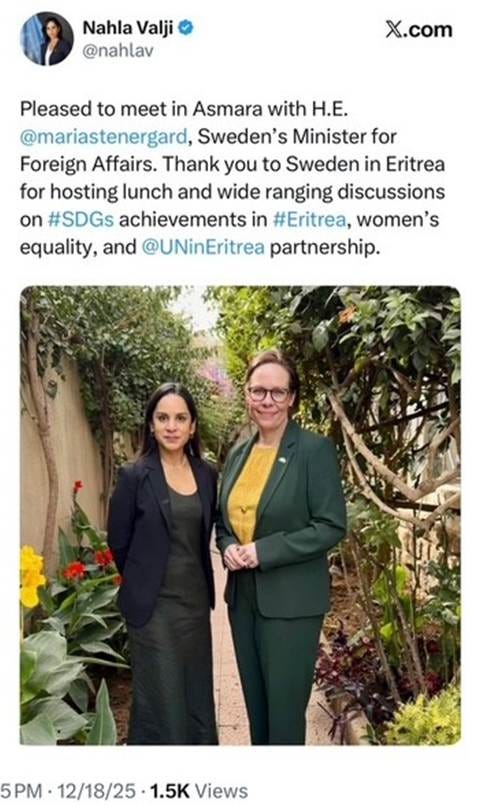
While in Asmara, Malmer Stenergard chose to pose for photographs with Nahla Valji, resident coordinator of the UN’s controversial #UNinEritrea project. According to a post on the social media platform X, the two discussed “women’s equality” issues and the “success” of recent UN sponsored initiatives, including holding government sanctioned human rights workshops in a country that has essentially enslaved its civilian population and is considered by international human rights organizations to be little more than an open-air prison. Just a few days before Malmer Stenergard’s visit, the UN Human Rights Office (OHCHR), called for the immediate and unconditional release of Eritrea’s more than 10,000 political prisoners.
Eritrea’s government has extended its most recent public relations campaign also to other Swedish actors, like podcaster Jesper Hedlund who promptly used the opportunity to tout tourism and affordable travel to the country – without mentioning the obvious risks such travel would entail.
Eritrea recently endorsed the UN Convention on the Rights of Persons with Disabilities (CRPD) in 2025, prompting a visit by the EU Ambassador, Joanna Darmanin. In addition, Eritrea plans to become the first country to outlaw genital mutilation by 2030. Whether these steps indicate profound and lasting changes or are merely token gestures to buy the regime time remains to be seen.
No public condemnation of Eritrea’s horrific human rights record
During and after her visit, Foreign Minister Stenergard made no reference to Eritrea’s horrific human rights record. When asked if she worried that her high-profile meetings with top-Eritrean officials would in any way legitimize one of the world’s most repressive dictatorships, Stenergard pointed to the recent prisoner releases. When pressed she added that she had not discussed the issue with Eritrean officials since “they do not like to talk about these releases.” Her 15 photo Instagram post after her return highlighted only the positive aspects of her trip.
Dawit Isaak’s international legal counsel, the Hon. Irwin Cotler, Canada’s former Attorney General and Minister of Justice recently expressed concern that such an approach not only encourages impunity but prevents accountability for serious human rights violations.
Malmer Stenergard repeatedly stressed that she conveyed to the Eritrean side the “importance of Dawit Isaak’s release”. However, her statement avoided any direct criticism of Eritrea’s brutal treatment of a fellow Swede and EU citizen. Nor did she mention the fact that Eritrea has so far not complied with her by now almost four months old demand from September 2025 to grant Dawit Isaak’s immediate release on humanitarian grounds.


From left to right: Swedish Eritrean journalist and award-winning playwright Dawit Isaak; newspaper editor and one of Eritrea’s most gifted poets Amanuel Asrat; prominent photographer and radio host Seyoum Tsehaye – all arbitrarily detained and victims of enforced disappearance since 2001.
Foreign Minister Malmer Stenergard has scheduled a meeting with members of Dawit Isaak’s family for January 14 – the Orthodox Christian New Year, a traditional date for granting clemency to political detainees. Rumors of an impending release of 800 prisoners or more, one of several of the regime’s anticipated gestures of national reconciliation, have been swirling in Asmara for weeks now. If true, hopefully also Dawit Isaak’s ordeal and that of his family can finally come to an end. Sweden’s Foreign Minister should make clear that she will accept nothing less.
Susanne Berger Senior Fellow, the Raoul Wallenberg Centre for Human Rights (RWCHR)
Caroline Edelstam Co-founder and President of the Edelstam Foundation