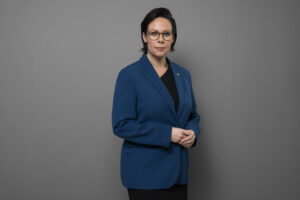


International attention and diplomatic protests alone are not enough to secure the release of imprisoned journalists. Achieving results requires concrete political pressure, meaningful incentives, and a Swedish government willing to use the tools at its disposal. This is the central message from Caroline Edelstam, President of the Harald Edelstam Foundation, and human rights researcher Susanne Berger, Senior Research Fellow at the Raoul Wallenberg Centre for Human Rights, from in an article published by Global Bar Magazine on October 12, 2026.
In the article “What Does It Take to Free an Imprisoned Journalist?”, journalist Rebecka Breisand examines why some imprisoned journalists have regained their freedom while others remain in detention despite extensive international protests. The question is particularly urgent in the cases of Dawit Isaak and Seyoum Tsehaye, two journalists who have been imprisoned in Eritrea since 2001, with their families still lacking reliable information about their circumstances.
The article opens with a discussion organized by Reporters Without Borders, featuring Betlehem Isaak and Abie Sium, the daughters of the two imprisoned journalists. Their continued struggle for their fathers’ freedom raises a fundamental question: What does it actually take to persuade an authoritarian government to release a political prisoner?
Caroline Edelstam: Securing a Release Requires Concrete Incentives
Caroline Edelstam, President of Harald Edelstam Foundation, emphasizes in the interview that securing the release of an arbitrarily detained individual ultimately depends on influencing the interests and calculations of the government responsible. Condemning a detention or repeatedly demanding a journalist’s release is not enough. To achieve results, international action must give the detaining government tangible reasons to reconsider its position.
Edelstam points out that such incentives may be economic, political, or legal.
She also warns of the consequences when international demands for the release of prisoners are not followed by meaningful consequences. Repeated protests risk losing their effectiveness, while the international community’s credibility is weakened.
“If Sweden and the international community repeatedly declare that detentions are unacceptable, yet continue to accept that their demands are ignored without consequences, they undermine their own credibility.”
— Caroline Edelstam, Global Bar Magazine, October 12, 2026 (translated from Swedish).
Her argument highlights the need for a more consistent foreign policy in which the defense of human rights is expressed not only through statements and diplomatic contacts but also through measures capable of changing the calculations of the detaining government.
Previous Releases Demonstrate That Different Approaches Are Possible
Global Bar Magazine examines several high-profile cases involving journalists detained because of their work. American journalist Evan Gershkovich, arrested in Russia in 2023, was released in August 2024 as part of an international prisoner exchange.
Reuters journalists Wa Lone and Kyaw Soe Oo, arrested in Myanmar in 2017 after reporting on atrocities against the Rohingya, were released through a presidential pardon after 511 days in detention.
Swedish journalists Martin Schibbye and Johan Persson, sentenced to 11 years in prison in Ethiopia, returned to Sweden in 2012 after 14 months of detention. Their release followed diplomatic efforts and a petition for clemency. At the same time, the case of Swedish publisher Gui Minhai, imprisoned in China, demonstrates that repeated diplomatic protests do not necessarily produce results.
These examples illustrate how releases may be achieved through different forms of negotiation, diplomatic initiatives, and political agreements. They also demonstrate that no single approach works in every case and that each situation requires a strategy tailored to the government responsible.
Susanne Berger: Sweden Must Build Real Diplomatic Leverage
Another central voice in the article is Susanne Berger, historian, Senior Research Fellow at the Raoul Wallenberg Centre for Human Rights, and founder of the Raoul Wallenberg Research Initiative.
Berger is one of the authors of the report How to Enhance Swedish Advocacy Mechanisms for Citizens Arbitrarily Detained or Missing Abroad, which examines how Sweden can strengthen its efforts on behalf of citizens who have been arbitrarily detained or have disappeared abroad. She emphasizes that international engagement matters, but its effectiveness must ultimately be measured by the concrete results it produces.
In Dawit Isaak’s case, Sweden and the international community have drawn attention to his imprisonment and demanded his release for nearly 25 years. Berger argues that it is now essential to examine whether those efforts have been translated into meaningful political leverage. Her analysis suggests that Sweden’s diplomatic efforts must move beyond simply voicing demands toward systematically building negotiating power.
Berger identifies several possible measures, including targeted sanctions, travel and visa restrictions, asset freezes, and other diplomatic actions. She also stresses the importance of mobilizing other governments and using Sweden’s influence within the European Union, the United Nations, and other international organizations.
“Sweden has more tools at its disposal than dialogue.”
— Susanne Berger, Global Bar Magazine, October 12, 2026 (translated from Swedish).
Her conclusion is that the Swedish government must be prepared to use these tools actively and make the release of arbitrarily detained citizens a clear political priority. In other words, the objective is not simply to raise awareness but to increase the political and diplomatic costs of continued detention, thereby creating conditions for meaningful negotiations.
Sweden Needs a Clearer National Strategy
According to the article, both Caroline Edelstam and Susanne Berger call for a more structured Swedish response to cases involving citizens arbitrarily detained abroad. They emphasize the importance of clearly defined government responsibilities, improved communication with families, and more active cooperation with relatives. They also identify potential legal and diplomatic approaches, including petitions for clemency where these may contribute to securing a release.
A particularly important issue concerns Swedish citizens who hold dual nationality. In Dawit Isaak’s case, Eritrea’s refusal to recognize his Swedish citizenship has contributed to the diplomatic difficulties.
Berger and Edelstam argue, however, that this must not become an excuse for political inaction. Sweden must continue exploring ways to bring Eritrea to the negotiating table, even under extremely difficult diplomatic circumstances. They also stress that waiting for a future change of government in Eritrea is not a viable strategy. Efforts to secure the journalists’ release must focus on opportunities for action available today.
Caroline Edelstam Calls for Stronger Swedish Crisis Response Mechanisms
Caroline Edelstam particularly emphasizes the need for a permanent and effective national mechanism that can be activated quickly when a Swedish journalist or another citizen is arbitrarily detained abroad. She points to international examples, including the United States’ Levinson Act and Canada’s initiative against arbitrary detention in state-to-state relations.
Such models could help Sweden establish clearer lines of responsibility, improve coordination among relevant government agencies, and rapidly mobilize legal, diplomatic, and human rights expertise.
Edelstam’s argument is that the government should not have to improvise its response when a citizen becomes the victim of state hostage-taking or politically motivated detention. Instead, established procedures, clearly defined mandates, and political readiness should already be in place so that appropriate measures can be implemented without delay.
Human Rights Must Have Consequences for International Relations
The article also addresses ongoing discussions within the European Union concerning relations with China. Member of the European Parliament Jonas Sjöstedt argues that Gui Minhai’s release should be a condition for new agreements with China. This position reflects Edelstam’s and Berger’s broader argument: international relations and economic interests cannot be treated as entirely separate from human rights considerations.
If arbitrary detention is to be effectively challenged, such violations must also influence how governments conduct their political and diplomatic relations. For Dawit Isaak, Seyoum Tsehaye, and other imprisoned journalists, this is not an abstract debate about foreign policy. It is a question of whether they can regain their freedom after many years of isolation and uncertainty.
The central conclusion of the Global Bar Magazine article is that international solidarity must be accompanied by political action. Public awareness, advocacy, and diplomatic protests remain important, but securing the release of imprisoned journalists also requires negotiating strategies, concrete measures of pressure, and sustained government responsibility.
Source and Further Reading
This article is a summary of Rebecka Breisand’s article “Vad krävs för att få en fängslad journalist fri?” (“What Does It Take to Free an Imprisoned Journalist?”), published in Global Bar Magazine on October 12, 2026. Statements by Caroline Edelstam and Susanne Berger are based on their interviews in the original Swedish article. The English quotations have been translated from Swedish. This text is a summary of the original article.
Read the original article in Global Bar Magazine (in Swedish)